Zara AI.
AI home automation — hardware meets intelligent control
Problem, solution, and result.
A tighter story that reads like a real client case study.
Most smart home setups are fragmented across vendors, apps and protocols. Users want one intelligent layer that just works.
A bespoke hardware hub running on-device inference, paired with a cinematic web control platform that orchestrates devices, scenes and AI-driven automations.
Sub-100ms response · Hardware + software integration · Single pane of glass for the home
A system designed to last.
Edge-native, observable and built for compounding velocity.
What was actually built.
A useful snapshot of the product and system behind the case study.
Most smart home setups are fragmented across vendors, apps and protocols. Users want one intelligent layer that just works.
A bespoke hardware hub running on-device inference, paired with a cinematic web control platform that orchestrates devices, scenes and AI-driven automations.
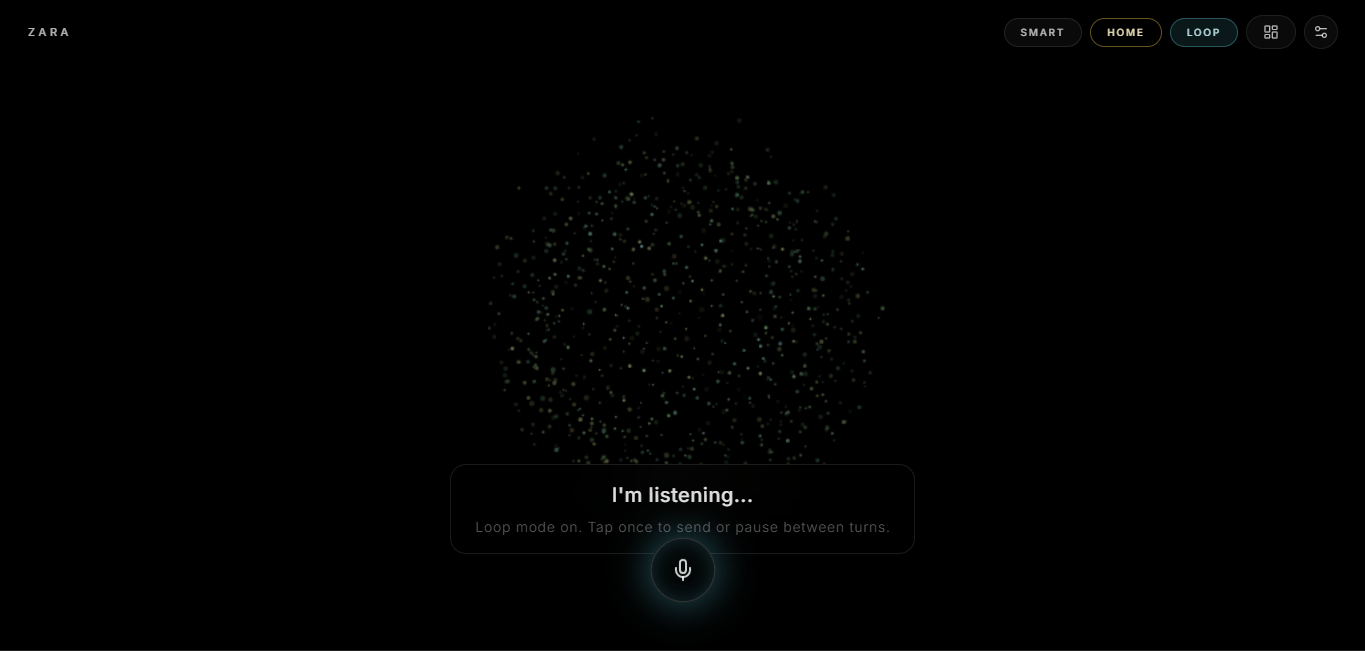
A project-specific visual that anchors the story without relying on a generic category mockup.
- Voice-native control
- AI scene generation
- Device mesh dashboard
- Remote access
- Energy intelligence
- Ambient automation
Crafted surface. Considered system.
Grouped so the product read feels intentional instead of crowded.
Core experience
- Voice-native control
- AI scene generation
- Device mesh dashboard
Platform & systems
- Remote access
- Energy intelligence
- Ambient automation
Five movements. One outcome.
The work is easier to follow when each phase gets its own room.
Stakeholder interviews, market analysis, success metrics and a sharpened product thesis.
Information architecture, user journeys, technical constraints and a pragmatic roadmap.
Editorial visual system, motion language and prototype-driven product surface design.
Type-safe full-stack engineering with observability, performance budgets and CI from day one.
Phased rollout, telemetry, growth instrumentation and an always-on iteration cadence.
These are the actual technologies used in this project, not a curated shortlist.
Multi-room spatial awareness, on-device vision and predictive comfort.